

Finding the right mortgage lender is one of the most important steps when buying a home. Today, you don’t have to visit banks or brokers in person—you can compare mortgage lenders online in just a few clicks. This shift has made home financing more transparent, competitive, and accessible. But with so many options, how do you know you’re making the best choice for your future? In this guide, you’ll discover how online comparison works, what to look out for, and how to avoid costly mistakes. By the end, you’ll feel confident about finding a lender that fits your needs and budget.
Why Compare Mortgage Lenders Online?
The days of calling multiple banks and waiting days for answers are over. Now, online comparison tools make it easy to see what’s available.
- Speed and convenience: You can see rates, fees, and terms from dozens of lenders in minutes, not hours.
- Wider choice: Online platforms show both big banks and smaller lenders you might miss otherwise.
- Transparent costs: Many online tools let you see not just interest rates but also closing costs, origination fees, and other hidden charges.
- Pre-qualification: Many sites offer a soft credit check, so you can see what you might qualify for without hurting your credit score.
A key insight many beginners miss: Online quotes aren’t always final. The rate you see online is often an estimate. Final approval and rates depend on your full application, credit history, and sometimes even the home’s location.
What To Look For When Comparing Lenders
Finding the lowest rate is important, but it’s not the only thing to focus on. Here’s what you should compare:
- Interest Rate: Even a 0.25% difference can add up to thousands over the life of the loan.
- Annual Percentage Rate (APR): This includes the interest rate plus points, fees, and other costs. APR gives a better picture of the total cost.
- Loan Types: Not every lender offers every type of mortgage. Common options are conventional, FHA, VA, and USDA loans.
- Fees: Look for origination fees, application fees, underwriting fees, and prepayment penalties.
- Down Payment Requirements: Some lenders need as little as 3%, others might need 20% for the best rates.
- Customer Service: Read reviews—can you reach them easily? Do they answer questions clearly?
- Closing Time: Some lenders can close in 2-3 weeks, others take much longer.
- Online Tools: Is the application process simple and straightforward? Can you upload documents securely?
Example: Comparing Lender Offers
To see the impact of rates and fees, consider this example for a $300,000 loan over 30 years.
| Lender | Interest Rate | APR | Origination Fee | Estimated Monthly Payment |
|---|---|---|---|---|
| Lender A | 6.25% | 6.40% | $1,200 | $1,847 |
| Lender B | 6.10% | 6.35% | $2,000 | $1,817 |
| Lender C | 6.35% | 6.43% | $0 | $1,870 |
You can see that a lower rate doesn’t always mean the lowest total cost. Always check the APR and fees, not just the interest rate.
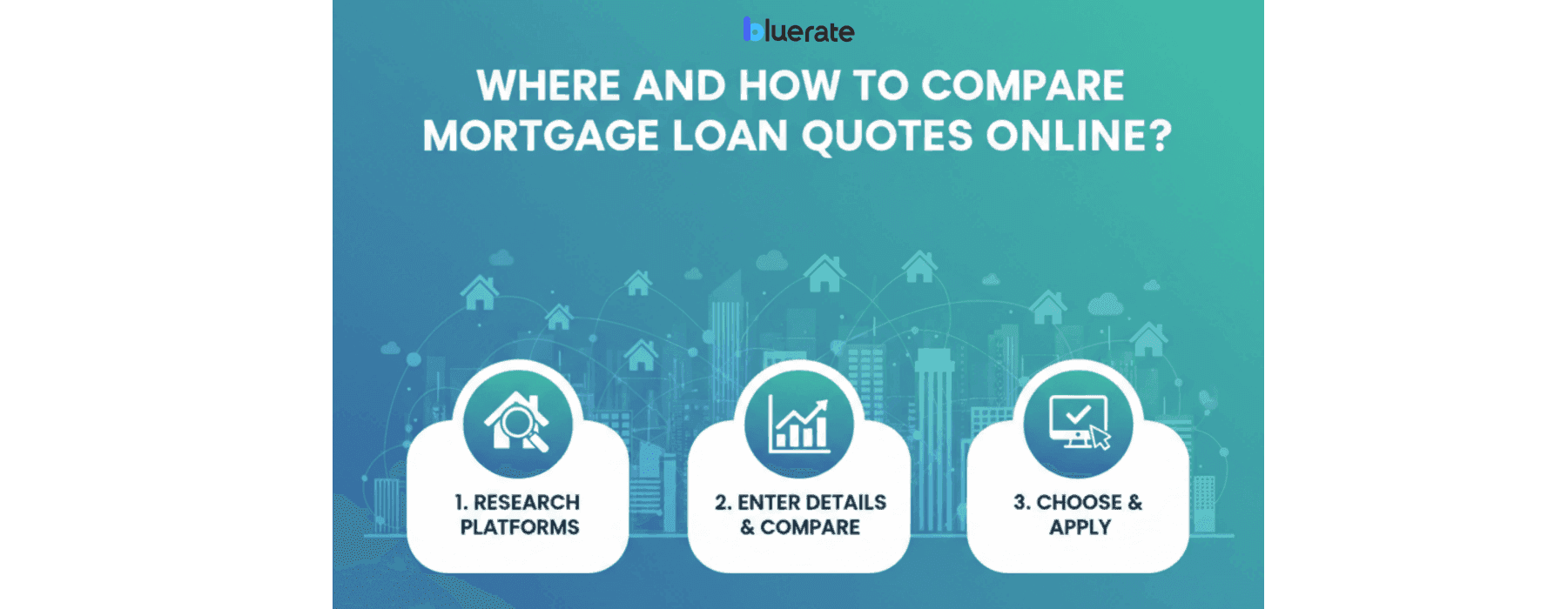
How Online Mortgage Comparison Sites Work
Most online mortgage comparison sites work in a similar way:
- You enter basic information: Home price, down payment, location, estimated credit score.
- The platform matches you with lenders that fit your profile.
- You get a list of offers, usually with estimated rates, fees, and terms.
Some popular platforms include LendingTree, Bankrate, and Zillow. These sites do not lend money themselves—they connect you with real lenders.
What Happens Next
After you choose a lender, you’ll need to complete a full application. This will require more detailed information and a hard credit check. Only after this will you get a Loan Estimate—a legal document that outlines all costs and terms.
Key Benefits Of Comparing Lenders Online
The main advantages go beyond just saving time.
- More negotiating power: If you have several quotes, you can ask your preferred lender to match or beat a competitor’s offer.
- Better understanding: Comparing multiple offers helps you spot “junk fees” or hidden costs you might otherwise miss.
- Access for all: Even buyers with low credit scores or small down payments can find options online.
- Instant rate updates: Online tools often update rates daily or even hourly, so you always see the latest numbers.
An important tip: Don’t just choose the first lender you see. Studies show that borrowers who compare at least three offers save thousands of dollars over the life of their loan.
Common Mistakes When Comparing Online
Even with all this information, many homebuyers make errors during the process:
- Comparing only interest rates: Fees and APR matter as much as the rate.
- Not checking the lender’s reputation: Some online lenders have poor service or slow closing times.
- Filling out too many applications: Too many hard credit checks can lower your credit score.
- Ignoring loan types: Not every lender offers the best program for your situation.
- Missing small print: Watch for prepayment penalties or adjustable rates that can change over time.
How To Get The Most Accurate Quotes
For the most accurate comparison, use the same data with each lender:
- Use the same home price and down payment.
- Enter the same estimated credit score.
- Choose the same loan type and term (for example, 30-year fixed).
- Ask for a Loan Estimate—this is a standardized form required by law.
This way, you can compare “apples to apples. ” If a lender won’t give you a Loan Estimate, consider that a red flag.
Factors That Influence Your Offers
Online tools give you a starting point, but your final offer depends on personal factors:
- Credit Score: Higher scores get better rates. Even a 20-point change can affect your payment.
- Debt-to-Income Ratio (DTI): Lenders look at how much debt you have compared to your income. Most prefer DTI under 43%.
- Location: Some lenders offer better deals in certain states or cities.
- Property Type: Condos, multi-family homes, and vacation homes may have different rules.
- Down Payment: The more you put down, the better your rate and terms.
How Credit Score Impacts Rate
Here’s how your credit score might affect your interest rate on a 30-year fixed loan:
| Credit Score Range | Estimated Interest Rate | Monthly Payment ($300,000 loan) |
|---|---|---|
| 760+ | 6.00% | $1,799 |
| 700-759 | 6.25% | $1,847 |
| 660-699 | 6.75% | $1,946 |
| 620-659 | 7.50% | $2,098 |
Even a small improvement in your credit score before applying can lead to big savings.
Pros And Cons Of Online Mortgage Comparison
No tool is perfect. Here’s a quick overview of the main advantages and disadvantages:
| Pros | Cons |
|---|---|
|
|
A non-obvious insight: Not all online lenders are direct lenders. Some are brokers who connect you with other banks, which can add another layer of complexity.
How To Protect Your Data When Comparing Online
Many platforms ask for personal information. Here’s how to stay safe:
- Use secure websites: Look for “https” and a padlock symbol in your browser.
- Read privacy policies: See how your data will be used or shared.
- Avoid sharing Social Security number too early: You don’t need to give this for basic quotes.
- Create a separate email: Some sites may send you lots of offers—keep your main inbox clean.
Steps To Compare Mortgage Lenders Online Like A Pro
If you want to get the best deal, follow this step-by-step process:
- Check your credit report and score. Fix any errors before applying.
- Decide your budget. Know how much you can afford for a down payment and monthly payment.
- Research loan types. See if you qualify for special programs (like VA or FHA).
- Use 2-3 comparison sites. Don’t rely on just one.
- Compare at least 3-5 lender offers.
- Read reviews and ask questions. Call or chat with lenders if you have doubts.
- Request Loan Estimates from your top choices.
- Negotiate. Ask your favorite lender to match or beat the best offer.
- Lock your rate when ready. Rates can change daily, so act quickly if you see a good deal.
- Keep records. Save all communications and documents for reference.
Real-world Example: Saving Money By Comparing
Imagine you’re buying a $400,000 home with a $320,000 mortgage. Lender A offers 6. 5% with $2,000 in fees, and Lender B offers 6. 25% with $4,000 in fees.
Over 30 years, the payment difference is about $50 per month. But if you plan to move in 7 years, the higher fee with Lender B may not be worth it. This is why it’s important to calculate both upfront and long-term costs before making a decision.
When To Consider A Local Lender
Online tools are great, but sometimes a local credit union or community bank may offer better service or special programs. For example, local lenders might have down payment grants, or they may know the area better and close loans faster. Always check at least one local option in addition to online offers.
Resources For Further Learning
If you want to dive deeper, the Consumer Financial Protection Bureau (CFPB) offers excellent guides on mortgage shopping and understanding loan estimates. You can find more at Consumer Financial Protection Bureau.
Frequently Asked Questions
What’s The Difference Between A Mortgage Broker And A Direct Lender?
A mortgage broker works with several lenders to find you the best deal. A direct lender (like a bank or credit union) lends you money directly. Brokers may have access to more options, but direct lenders often process loans faster.
Will Comparing Mortgage Lenders Online Hurt My Credit Score?
Most online comparisons start with a soft credit check, which doesn’t affect your score. Your score is only affected when you complete a full application and a hard credit check is done.
How Many Lenders Should I Compare Before Choosing?
Experts recommend comparing at least three to five lenders. This gives you a better sense of the market and helps you find the best rate and terms.
Can I Negotiate The Fees And Rates I’m Offered?
Yes, you can often negotiate rates and fees. Showing quotes from other lenders can give you leverage to ask for a better deal.
Is It Safe To Give My Information To Online Mortgage Comparison Sites?
Most reputable sites use secure connections and protect your data. However, always check the privacy policy and only share sensitive details (like your Social Security number) after you’ve chosen a lender.
Comparing mortgage lenders online is one of the smartest moves you can make when buying a home. With the right approach, you can save money, avoid surprises, and get a loan that truly fits your needs. Take your time, do your research, and don’t be afraid to ask questions—your future self will thank you.

Read More:
- Best Personal Loan Rates: Unlock Top Offers for 2026
- Bad Credit Personal Loans Guaranteed Approval: Easy Access Today
- Debt Consolidation Loan Online: Simplify Your Finances Fast
- First Time Home Buyer Loan Programs: Your Ultimate Guide 2026
- Home Equity Loan Rates Comparison: Find the Best Deals Today
- Small Business Loan Pre Approval: Fast Track Your Funding Success
- Mortgage Pre Approval Online: Fast-Track Your Home Buying Success
- Best Mortgage Refinance Rates: Unlock Lower Payments Today